But Did You Die: Groovy Mom Keychain Review
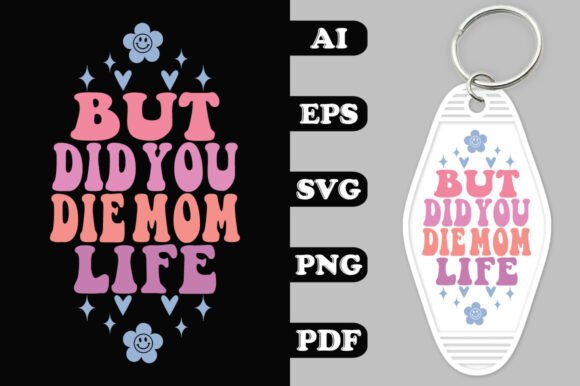
As an embroidery designer who has digitized and tested countless files for commercial production, I approach every new graphic with a specific question: will this actually stitch out cleanly on a finished product? When evaluating the But Did You Die Mom Life Groovy Key Cha design asset, my focus shifts immediately from its trendy digital appearance to its structural integrity as a machine embroidery design. This graphic captures a very specific cultural moment, blending retro hotel keychain aesthetics with modern sarcastic mom humor. However, translating that nostalgia into thread requires a critical eye toward stitch density, fabric compatibility, and long-term wearability.
Capturing the Retro Vibe Without Losing Definition
The first impression of this design is undeniably strong. It taps into the current demand for 70s-inspired typography and vintage motel memorabilia. For an Etsy seller or small shop owner, this visual hook is valuable. The layout mimics the classic diamond or oval shape of a retro plastic key tag, which provides a natural boundary for hooping and placement. As a piece of graphics intended for crafts, it succeeds in setting a mood that is both lighthearted and relatable.
However, when converting this SVG concept into an embroidery file, the groovy, flowing font presents immediate challenges. In a digital mockup, those curved serifs look effortless. In satin stitch, they can become problematic if the column width is too narrow or if the underlay is insufficient. During my review process, I look closely at the lettering thickness. If the "Groovy" script is too delicate, it risks getting lost in the texture of a terry cloth towel or pilling on a sweatshirt. The design needs enough boldness to support the stitch structure without looking blocky or losing its retro charm. A successful adaptation of But Did You Die Mom Life Groovy Key Cha must balance aesthetic authenticity with mechanical reality.
Real-World Application: The Tote Bag Test
To truly judge this design, I mentally place it in a real-life production scenario. Imagine preparing a custom embroidered tote bag for a Mother’s Day market or a boutique holiday sale. Canvas totes are popular, but their weave can be unforgiving. I recently worked on a similar sarcastic quote project where the client wanted a vintage feel on unbleached canvas.
In this context, the But Did You Die Mom Life Groovy Key Cha design serves as an excellent centerpiece. The contained shape of the keychain graphic helps stabilize the stitching area, acting almost like a built-in frame. For a tote bag design, I would recommend using a medium-weight cutaway stabilizer to prevent the canvas from pulling or distorting around the dense fill stitch areas of the retro background. The contrast between the creamy canvas and vibrant, retro-colored threads (think mustard yellow, burnt orange, or teal) elevates the handmade product from a simple craft to a boutique-worthy accessory. Customers respond to this level of intentionality; they can see that the design was chosen specifically for the medium, not just slapped onto whatever fabric was available.
Navigating Fabric Textures and Hoop Limitations
While this design shines on stable fabrics like canvas, denim, or twill, it requires caution elsewhere. If you are planning sweatshirt embroidery, be aware that fleece and French terry have significant loft. Tiny details in the "Mom Life" text may sink into the pile. In these cases, using a water-soluble topping is non-negotiable to keep the stitches crisp and legible.
I also advise testing this design before attempting it on stretchy performance fabrics or thin baby clothes. The density required to create that opaque, plastic-keychain look can be heavy. On lightweight knit, this could cause puckering or drag. Furthermore, consider your hoop size. While keychains are inherently small, scaling this design up for a jacket back or down for a literal functional keychain changes the stitch dynamics entirely. Always verify that your specific embroidery file has been optimized for the target size. Resizing a complex applique design or dense satin stitch graphic by more than 10-15% in your machine software can compromise stitch integrity.
Commercial Viability and Customer Perception
For creative entrepreneurs and apparel decorators, the value of this design extends beyond the stitch out. It is about sellability. The phrase "But Did You Die" resonates with a demographic that appreciates dark humor mixed with parenting realities. When used on a personalized gift or a ready-to-ship item, it signals that the maker understands their audience. However, professionalism is key. A sloppy stitch-out on a sarcastic shirt undermines the joke. The irony only lands if the quality is premium.
If you are selling digital embroidery files or sublimation transfers based on this theme, clarity is paramount. Your printable mockup should accurately represent how the colors interact. Does the retro orange vibrate against the background? Is the text readable at thumbnail size on a mobile screen? These factors drive buyer engagement. For physical products, ensure your listing photos show the texture of the thread. Buyers want to see the dimensionality of the satin stitch and the precision of the running stitch outlines. This builds trust and justifies a higher price point for your craft business items.
Essential Designer Notes for Success
Before loading But Did You Die Mom Life Groovy Key Cha into your machine for a final run, adhere to these practical checkpoints:
- Test Stitch on Scrap: Never assume a digital proof equals a physical result. Test on the exact fabric and stabilizer combination you intend to use for the final embroidered patch or garment.
- Check Thread Contrast: Retro palettes often use analogous colors. Ensure there is enough value contrast between the text and the keychain background so the message remains legible after washing.
- Verify Licensing: Before listing any finished product or digital asset, confirm the license terms for this specific SVG. Commercial embroidery rights vary significantly between designers.
- Inspect Small Details: Zoom in on the embroidery file. Are there jump stitches that need trimming? Is the travel path efficient? Clean up any unnecessary trims to improve production speed and finish quality.
- Stabilizer Selection: Match the stabilizer to the end use. Use tear-away for stable woven goods meant for display, and soft cutaway or no-show mesh for wearable custom apparel that touches skin.
- Mockup Reality Check: Compare light and dark fabric backgrounds. Some retro colors disappear on black fabric unless outlined or backed with white underlay.
Final Thoughts on Production Value
The But Did You Die Mom Life Groovy Key Cha asset offers a fantastic opportunity for makers to tap into trending aesthetics while showcasing technical skill. Whether you are creating a holiday gift for a fellow parent or stocking your Etsy shop with best-selling sarcasm, success lies in the execution. Treat this graphic not just as a funny saying, but as a technical blueprint that demands respect for stitch physics. By paying attention to density, fabric choice, and stabilization, you transform a simple SVG into a durable, desirable embroidered product that customers will be proud to carry. Remember, in the world of machine embroidery, the difference between a hobbyist attempt and a professional staple is always found in the testing phase. Take the time to get it right, and the retro charm will translate perfectly from screen to seam.